If you are like me, you like stories because there is always some lesson that can be learned from them. Well, let me tell you a story about a lady named Nia.

In the heart of a vibrant city, where the rhythm of life beats to the pulse of history, there lived a woman named Nia. At thirty-three, she carried within her the echoes of generations past, the strength and resilience of her ancestors flowing through her veins like a river of hope.
Nia’s life journey was marked by both triumph and struggle, her path intersecting with the stories of those who came before her. Much like Hannah from biblical scriptures, Nia faced her own trials. She, too, grappled with the weight of infertility in the early part of her marriage that threatened to overshadow her sense of self-worth. She was married to Marcus, an accountant and also her childhood sweetheart.
Nia and Marcus dreamed of building a family of their own. Despite their unwavering love and devotion to each other, their home remained barren, devoid of the laughter and pitter-patter of little feet. The ache of infertility was a constant companion, a silent burden that Nia carried with her every day. And yet, like Hannah in the Bible, she refused to succumb to despair. She drew strength from her faith and the enduring love she shared with Marcus.
In a world that often failed to see her for who she truly was, Nia found solace in her community – a tapestry of voices and stories woven together by shared experiences and shared struggles. She leaned on her sisters for support, finding comfort in their understanding nods and empathetic embraces. Alongside her personal struggles and despite the support, though, Nia also faced the shadows of societal expectations and stereotypes. She felt the weight as a black woman of the stereotypes that portrayed her as strong and resilient, but often overlooked her vulnerability and pain.

And yet, amidst her pain, Nia refused to be defined by her infertility. She was more than just a woman longing for a child – she was a daughter, a sister, a friend, and a dreamer. Her worth was not tied to her ability to conceive, but rather to the love and compassion she brought into the world each day.
With each passing year, Nia’s faith in God and in herself grew stronger. She believed her story was still being written. There was both purpose and meaning in her journey, even if she couldn’t see it yet. And then, one miraculous day, Nia’s prayers were answered. She discovered that she was finally pregnant after years of waiting and hoping– a tiny spark of life growing within her womb. The news filled her heart with overwhelming joy and gratitude, washing away the pain and uncertainty of years past.

When Nia cradled her newborn child in her arms, she knew her journey was far from over. Like Hannah, she had been chosen for a special purpose, entrusted with the sacred task of nurturing and guiding the next generation. She gazed into her baby’s eyes with great admiration. She saw the reflection of her ancestors – a testament to their resilience, their strength, and their unwavering belief in the power of love to overcome even the greatest of obstacles. With each gentle kiss and tender embrace, Nia whispered a prayer of thanks to those who had come before her. She knew their legacy lived on in her, in her child, and in the countless generations yet to come.
The more Nia cradled her newborn son in her arms, the more she felt a surge of overwhelming love overtake her. Her love for him blossomed each passing day. But amidst the joy and gratitude, a shadow lingered in the depths of her heart – a fear born from the uncertainty of the future. Nia watched him grow with a mixture of pride and trepidation.
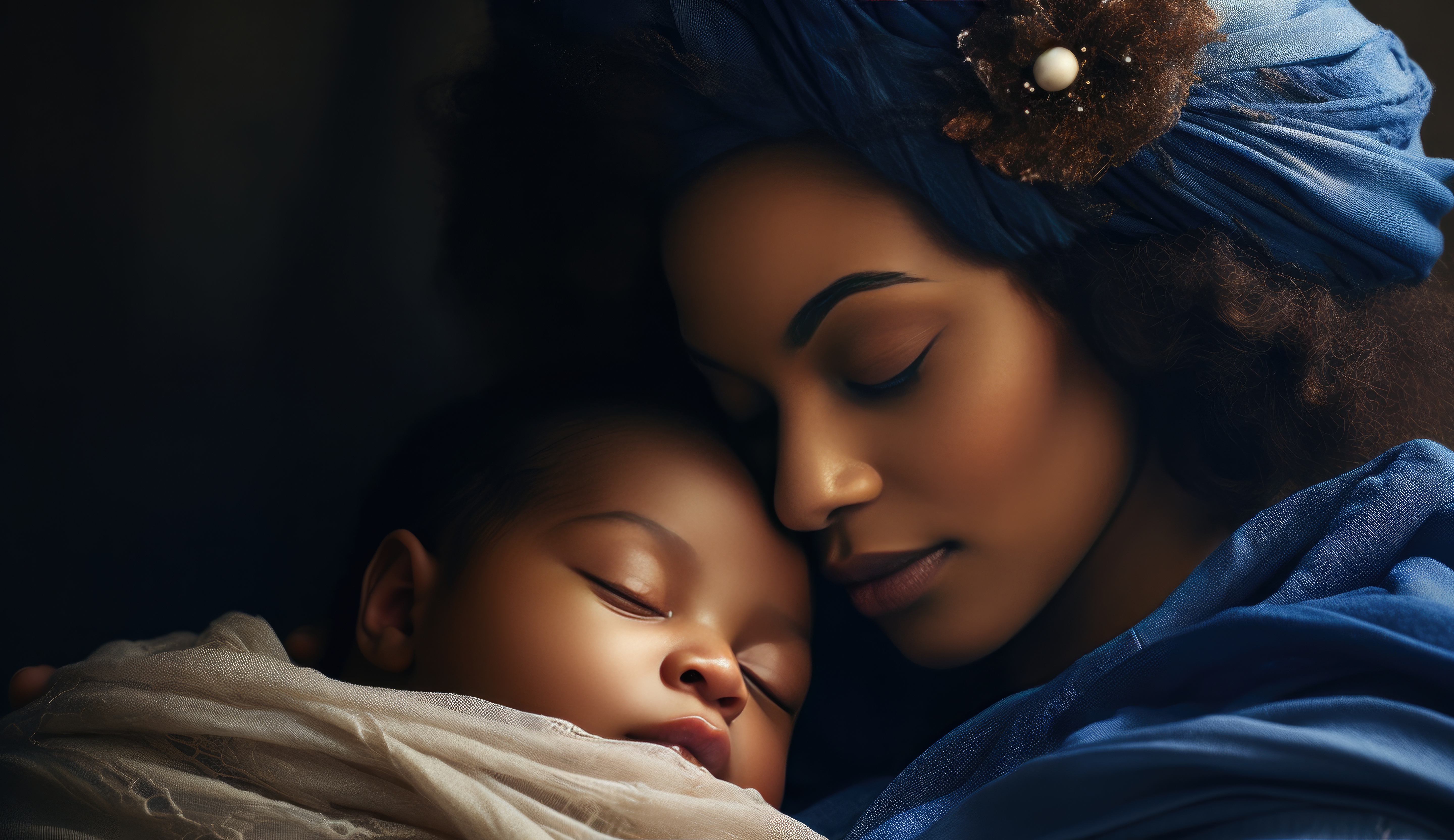
Her relatable concerns would prove to be valid. When her son turned three, tragedy struck. Doctors diagnosed him with a rare illness, one that caused him great pain and suffering that carried well his tender years. Each day, Nia’s heart shattered into a million more pieces as she watched her precious child endure agony no child should ever know.
In the darkness of the hospital room, Nia grappled with feelings of guilt and despair. She questioned whether her unrelenting desire to have a child had led to her son’s suffering or whether she had somehow failed him as a mother. But amidst the chaos of her emotions, Nia continued to find strength in her faith and in the unwavering love of her community just as she had before he was conceived. Her family and friends rallied around her, offering support and encouragement in her darkest hours.
Together, Nia and Marcus poured every ounce of love and determination into caring for their son. They refused to let the illness steal his light and joy. They sought out the best medical care and explored every avenue in search of hope and healing.

As Nia relentlessly stood by her son’s bedside, her heart heavy with worry and fear, she never imagined that another blow was about to strike. One evening, as she sat beside her sleeping child, Marcus dropped a bombshell that shattered her world. “I can’t do this anymore, Nia,” he confessed, his voice tinged with anguish and tears flowing from his eyes. “I can’t bear to see him suffer, to watch helplessly as he fights for his life. I need to get away, to clear my head.”
Nia’s breath caught in her throat as Marcus’s words pierced her heart like a dagger. How could he abandon them both now, when they needed him the most? Anger and betrayal surged within her, threatening to consume her with bitterness and despair. But amidst the chaos of her emotions, Nia found a flicker of strength – a determination to rise above the pain and fight for her son’s survival, no matter the cost, even if she had to do so alone.
Nia sobbed and yelled as she watched Marcus pack his bags. Surprisingly, when he walked out and closed the door behind him, she felt a sense of liberation wash over her. She knew she couldn’t rely on him to be their rock anymore. She would now have to be their anchor, their guiding light in the storm.

In the days and weeks that followed, Nia poured every ounce of love and energy into caring for her son, refusing to let Marcus’s abandonment weaken her resolve. She leaned on her community for support. She drew strength from their unwavering belief in her strength and resilience. Though the journey ahead was fraught with more uncertainty and fear, Nia faced it head-on, her faith in God and in herself unwavering. She knew that no matter what the future held, she would never give up on her son – for he was the light of her life. She desperately longed for his existence and was the embodiment of all her hopes and dreams.
As she watched him fight bravely against the illness that threatened to steal his innocence, Nia vowed to be his fiercest advocate and his steadfast champion in the battle for survival. Nia had learned that sometimes, in the face of adversity, the true measure of a person’s strength lies not in the absence of fear, but in the courage to keep going, even when the world seemed darkest. She stood by her son’s side. Her unyielding love burned brighter than ever before. Nia knew that together, they would overcome whatever obstacles lay in their path. They were warriors, united in a bond that could never be broken, the same connection she had with those who preceded her.
As Nia navigated the stormy waters of her son’s illness and her husband’s departure, she found herself clinging desperately to her faith like a lifeline in the darkness. Seeking solace and guidance, she turned to the wise elders of her church – the church mothers who had weathered countless storms of their own. Clutched with grief and unceasing tears streaming down her cheeks, Nia poured out her heart to the church mothers. They comforted her. They prayed for her. They constantly spoke comforting and reassuring words of wisdom. Though their advice to “just have faith and pray” echoed in her ears, Nia couldn’t shake the feeling of despair that clung to her like a shadow.
Even her best efforts to remain strong and hopeful left Nia consumed by feelings of loneliness and depression. The weight of her son’s illness and her husband’s abandonment bore down on her like a heavy burden which threatened to crush her spirit beneath its weight.
Nia cried out to God in the solitude of her darkest moments. Her prayers were a desperate plea for relief from the pain and suffering that engulfed her. But as the days turned into weeks and the weeks into months, her prayers seemed to go unanswered, leaving her feeling abandoned and all alone. However, amidst the darkness, a glimmer of hope flickered within Nia’s heart – a reminder that even in the depths of despair, she was not truly alone. Slowly but surely, she began to open herself up again to the support and love of her community. She allowed their kindness and compassion to penetrate the walls she had allowed to be built around her heart.
Each word of encouragement and gesture of kindness caused Nia to feel a spark of hope that continually reignited within her soul. She realized that while faith and prayer were powerful tools, they were not the only weapons in her arsenal against despair. Drawing strength from the love and support of her community, Nia began to take small steps towards healing and wholeness. She even sought out professional help to address her depression, as recognized that it was okay to ask for help when she needed it most.
Despite the continued encouragement and advice from her family and community circle to simply pray and have faith, Nia found herself still grappling with a pain that ran much deeper than words alone could heal. Time after time, she knelt in prayer with a sorrowful heart. She longed for the immediate joy and peace that seemed to elude her grasp.
However, while she held onto her faith and hope with unwavering determination, the harsh reality of her circumstances refused to be ignored. The cries of her son echoed in her ears, a constant reminder of the suffering that surrounded her. And though she prayed fervently for a miracle, the silence of God seemed to deafen her with its emptiness. Nia wrestled with doubt and despair. She questioned whether her prayers were falling on deaf ears, whether her faith was strong enough to weather the storm that raged within her soul.

Though the pain of her circumstances remained ever-present, Nia discovered she was not alone in her struggle. She began to find strength in vulnerability, courage in compassion, and hope in the promise of a brighter tomorrow. Nia began to embrace the fact true healing comes not from the absence of pain, but from the power of love to conquer even the greatest of sorrows. And as she continued to navigate the twists and turns of her journey, she held onto the belief that with faith, hope, and love, all things are possible. Her past inability to find immediate joy and peace in her faith was not a sign of weakness or a testament to her own inadequacy as a believer.
In fact, as she surrendered to the healing power of self-compassion and grace, Nia found a newfound sense of peace and acceptance within herself. She knew that while her journey may be or even continue to be fraught with challenges and setbacks, she would face them with courage and humility. She would rest secure in the knowledge that she is never alone. For Nia had learned that true faith was not about the absence of doubt or despair, but rather the courage to confront them head-on, with an unwavering belief in the power of love to conquer even the darkest of nights.
She embraced her humanity, flaws and all. She discovered she was stronger than she had ever imagined. she stood as a beacon of hope for son and others in a world shrouded in darkness. Nia realized she was going to be ok and so was her son.
“We cannot always control everything that happens to us in this life, but we can control how we respond. Many struggles come as problems and pressures that sometimes cause pain. Others come as temptations, trials, and tribulations.” – L. Lionel Kendrick
I am certain there are some parts of Nia’s story that resonate with you. I know for me, her story almost runs parallel to my own in many ways. I have been where Nia found herself on a number of occasions throughout my life. I, too, have experienced extreme moments of grief and despair that let me desperately trying to make sense of situations.
I know just like Nia that God is my source of strength and joy, but convincing my ailing heart of the same is no easy feat in the darkest of moments. I was raised in the church, a Pentecostal church through my teenage years. I have been groomed in the Christian Faith. I am not supposed to be so overcome with my circumstances that I cannot see faith in God as the way to joy and peace because I know Jesus loves me without a shadow of doubt. I have accepted the incomparable gift of salvation.
However, my past traumas are just that, past. My scars, both physical and emotional, are there to serve as constant reminders of how I have overcome the many storms in my life. Nonetheless, I can admittedly sit here and say that during the darkest hours of my life, I was Nia, seeking to conquer thoughts that seem to come when you are at your lowest points.
We are human with real emotions and experience real pain that can leave us parallelized, even in the midst of our faith. So, the story of Nia should resonate deeply with each of us in some way. The human experience will bring forth agony and despair at times. We can not escape it, no matter how hard we try. In our darkest moments, when the weight of our circumstances feels unbearable, it is natural to turn to faith and community for solace and support.
Like Nia, we may find ourselves grappling with conflicting emotions – the desire to hold onto hope, even as despair threatens to engulf us. Nonetheless, Nia’s struggle with guilt over her feelings of despair serves as a poignant reminder that it’s okay to not always feel strong or resilient. We may question our faith, our strength, and our worthiness in the face of adversity, but it’s important to remember these feelings are a natural part of the human experience.
There are even instances in the Bible where Jesus wept or cried out. These accounts provide powerful parallels to the human experience of agony and despair, much like the story of Nia. One notable example is found in the Gospel of John, where Jesus weeps at the tomb of his friend Lazarus. Despite his divine nature, Jesus was not immune to the pain of loss and grief either. His tears serve as a reminder of his humanity – a recognition of the deep sorrow that accompanies death and separation.
Similarly, in the Garden of Gethsemane, Jesus cried out to God in anguish as he faced the prospect of his impending crucifixion. In Matthew 26:39, Jesus prays, “My Father, if it is possible, let this cup pass from me; yet not as I will, but as you will.” In this moment of intense agony, Jesus expresses his raw emotions and wrestles with the weight of his circumstances.
These instances of Jesus weeping and crying out highlight the complexity of human emotions and the depth of his empathy for our suffering. They remind us that even the Son of God experienced moments of despair and anguish, and that it’s okay for us to do the same.
Just as Jesus found solace in prayer and in the presence of his disciples, we too can find comfort in turning to God and to our community for support during times of agony and despair. And through it all, we can take comfort in the knowledge that Jesus understands our pain and walks alongside us in our darkest moments, offering hope and healing along the way.
Ultimately, Nia’s journey teaches us that healing is a process. It is one that requires patience, self-compassion, and grace. By acknowledging and embracing our emotions, even the most painful ones, we can begin to find peace and acceptance within ourselves. Through it all, we can take solace in the knowledge we are never truly alone in our struggles, for there is always hope to be found in the midst of despair. This is why we look to the cross which is our ultimate symbol of hope.
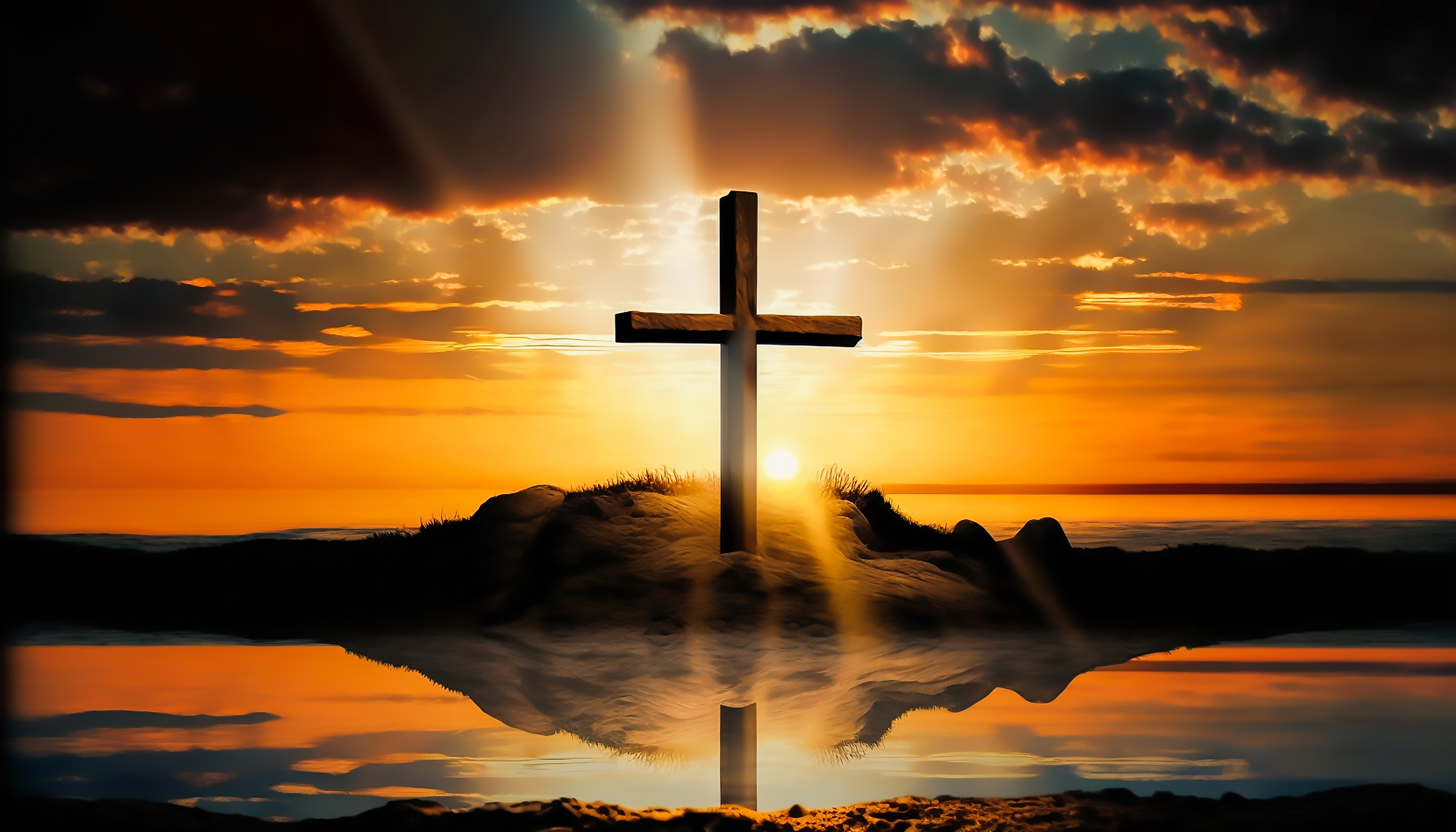
By saying, “It’s deeper than the cross,” I do not mean to suggest that our pain and suffering holds significant weight or importance beyond the central event of Christian faith – the crucifixion and resurrection of Jesus Christ. There is nothing greater than the profound sacrificial act of Jesus laying down his life for humanity’s redemption. The cross is and will always be the ultimate victory and cornerstone of our faith, symbolizing the sacrificial love of Jesus Christ and the redemption of humanity.
Despite our faith and belief in the power of the cross, we are still human beings who experience pain and suffering. We are going to encounter struggles, doubts, and moments of deep emotional anguish in the midst of our faith. These experiences are a natural part of the human condition and do not diminish the significance of the cross or our commitment to following Christ.
Let me put it another way. Faith does not exempt us from pain. Rather, it provides us with the strength and resilience to endure it. Just as Jesus wept and cried out in anguish during his time on earth, we too may find ourselves wrestling with our own emotions and challenges. Therefore, while we hold fast to the hope and promise of the cross, we must also embrace the reality of our humanity, recognizing that our faith journey includes moments of vulnerability and struggle. In doing so, we can find comfort and support in our relationship with God and our community of believers, like Nia, knowing we are never alone in our pain and suffering. The cross’ offerings both saves us and validates our humanity.
The instances in the Bible where Jesus wept or cried out provide powerful parallels to the human experience of agony and despair, much like the story of Nia. One notable example is found in the Gospel of John, where Jesus weeps at the tomb of his friend Lazarus. In John 11:35, it’s written that “Jesus wept.” Despite his divine nature, Jesus was not immune to the pain of loss and grief. His tears serve as a poignant reminder of his humanity – a recognition of the deep sorrow that accompanies death and separation.
Similarly, in the Garden of Gethsemane, Jesus cried out to God in anguish as he faced the prospect of his impending crucifixion. In Matthew 26:39, Jesus prays, “My Father, if it is possible, let this cup pass from me; yet not as I will, but as you will.” In this moment of intense agony, Jesus expresses his raw emotions and wrestles with the weight of his circumstances. These instances of Jesus weeping and crying out highlight the complexity of human emotions and the depth of his empathy for our suffering. They remind us that even the Son of God experienced moments of despair and anguish, and that it’s okay for us to do the same.
Just as Jesus found solace in prayer and in the presence of his disciples, we too can find comfort in turning to God and to our community for support during times of agony and despair. We can take comfort in the knowledge that Jesus understands our pain and walks alongside us in our darkest moments, offering hope and healing along the way.
What we can learn from Nia’s journey is that healing is a process – one that requires patience, self-compassion, and grace. By acknowledging and embracing our emotions, even the most painful ones, we can begin to find peace and acceptance within ourselves. And through it all, we can take solace in the knowledge that we are never truly alone in our struggles, for there is always hope to be found in the midst of despair. As we look to the cross, let’s remember that the cross is our ultimate symbol of hope and victory.
I want this to resonate with you. Faith does not exempt us from pain. Rather, it provides us with the strength and resilience to endure it. Just as Jesus wept and cried out in anguish during his time on earth, we may also find ourselves wrestling with our own emotions and challenges. Therefore, while we hold fast to the hope and promise of the cross, we must also embrace the reality of our humanity, recognizing that our faith journey includes moments of vulnerability and struggle. In doing so, we can find comfort and support in our relationship with God and our community of believers, knowing that we are never alone in our pain and suffering.
James 1:2-6: “Consider it pure joy, my brothers and sisters, whenever you face trials of many kinds, because you know that the testing of your faith produces perseverance. Let perseverance finish its work so that you may be mature and complete, not lacking anything. If any of you lacks wisdom, you should ask God, who gives generously to all without finding fault, and it will be given to you. But when you ask, you must believe and not doubt, because the one who doubts is like a wave of the sea, blown and tossed by the wind.”
Yours truly,
Erika


 Live With Joy With Coach Erika L. Wilkins
Leave a comment